
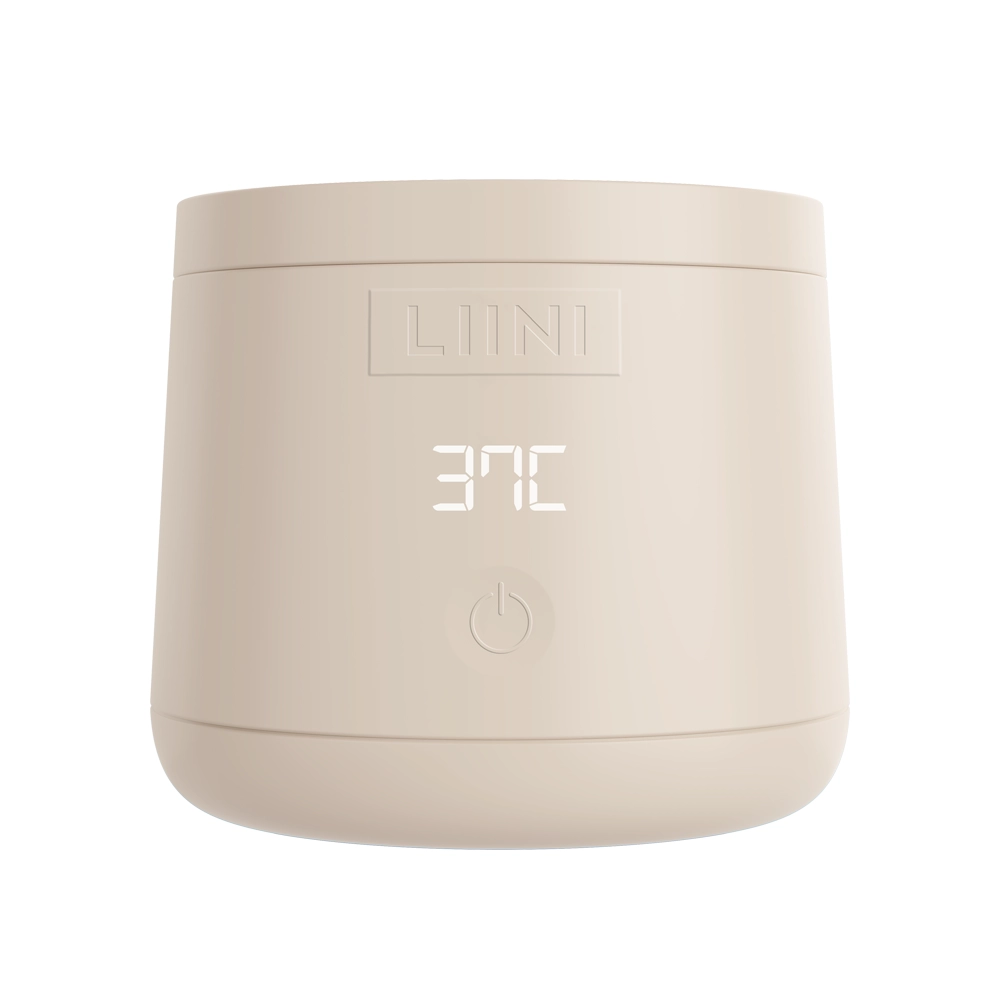
 4.0 PRObattery · on the go
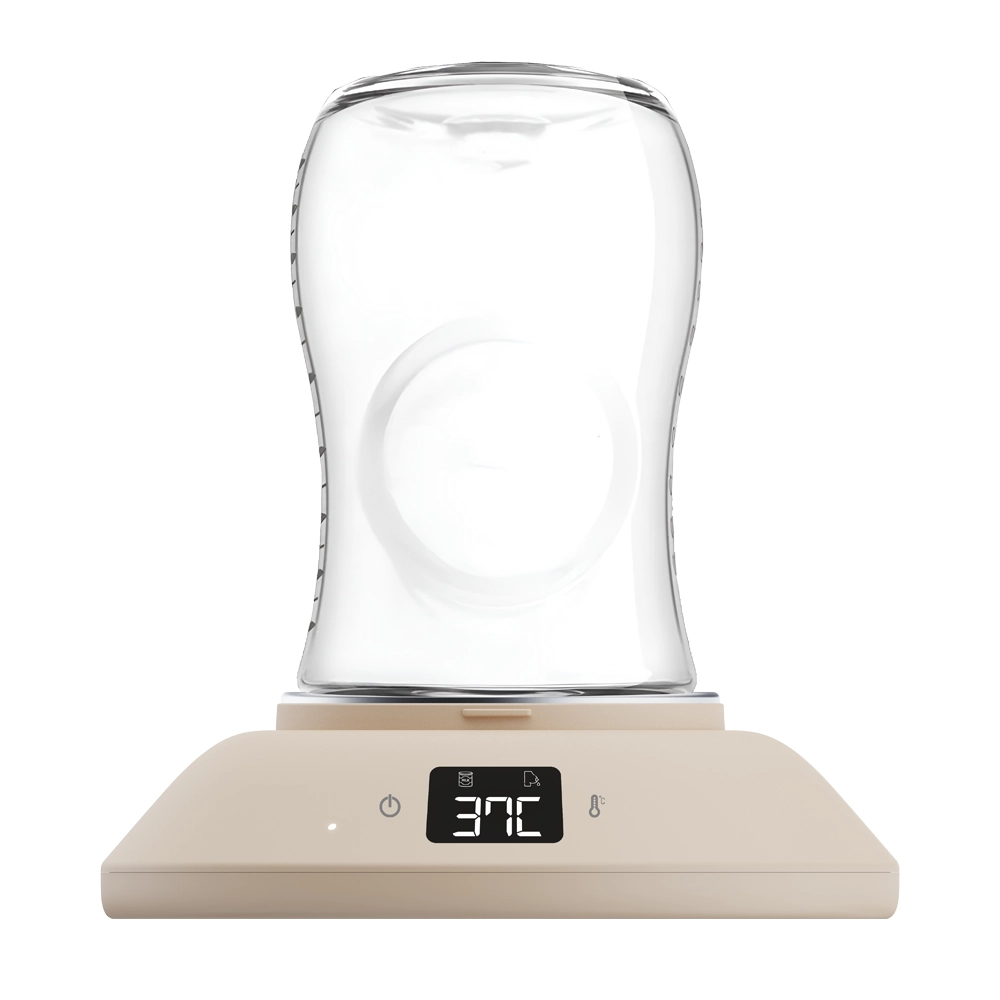 Home 230Vfor home
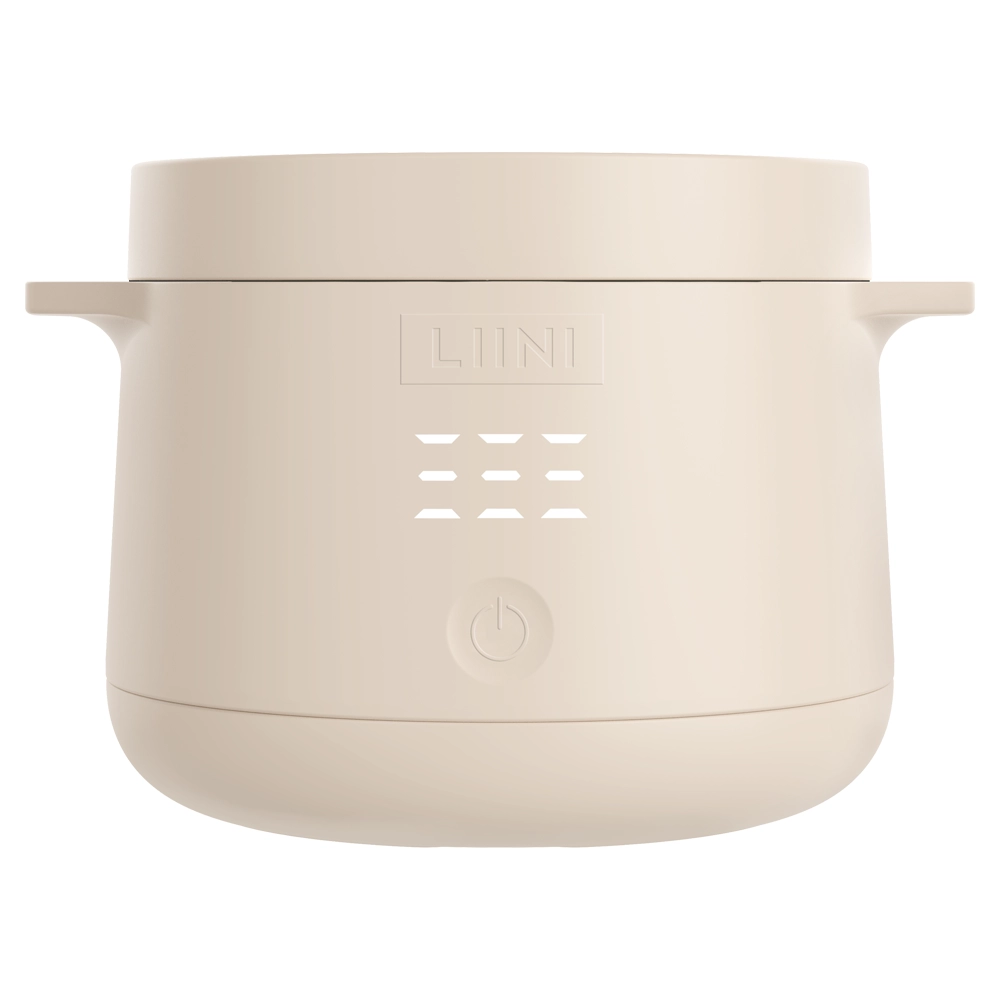 Baby food warmersfrom 6 months
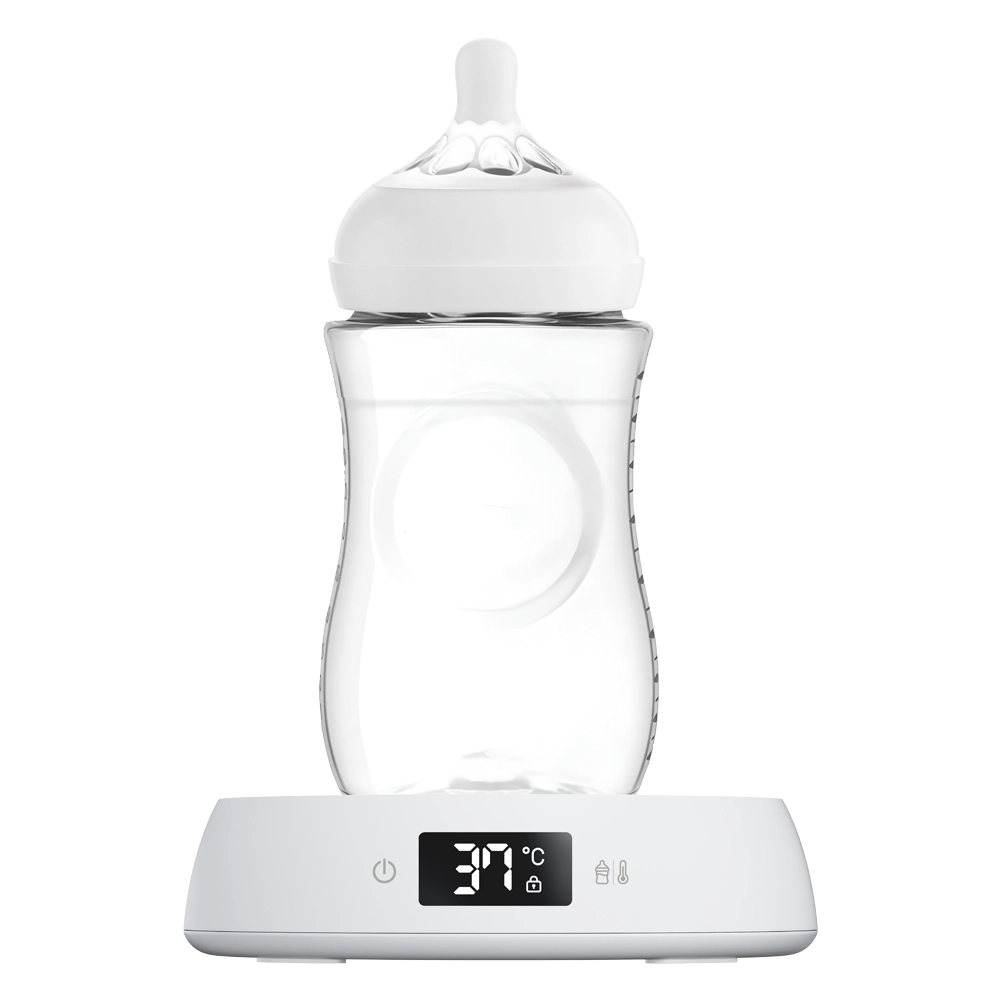 Night Stationfor the night




 Cleaning Wipes Monthly Pack
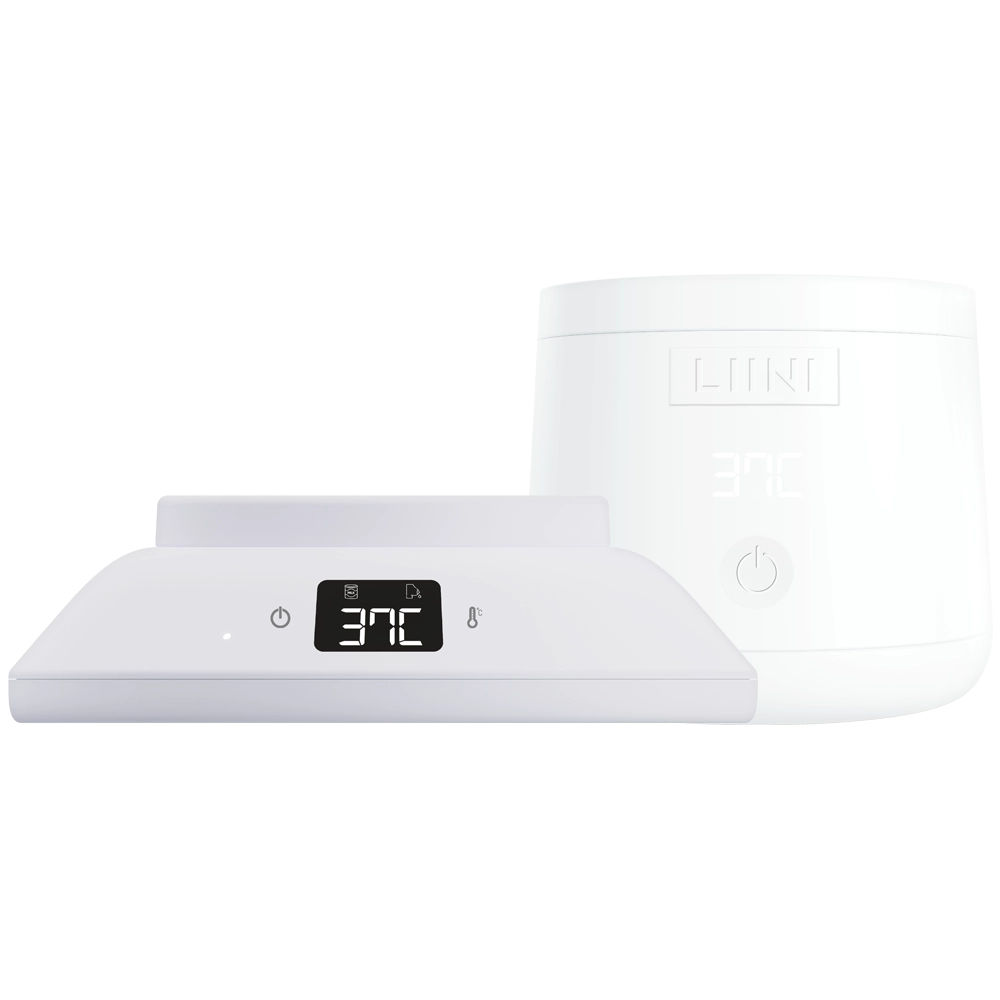 Home & 2Go Bundle
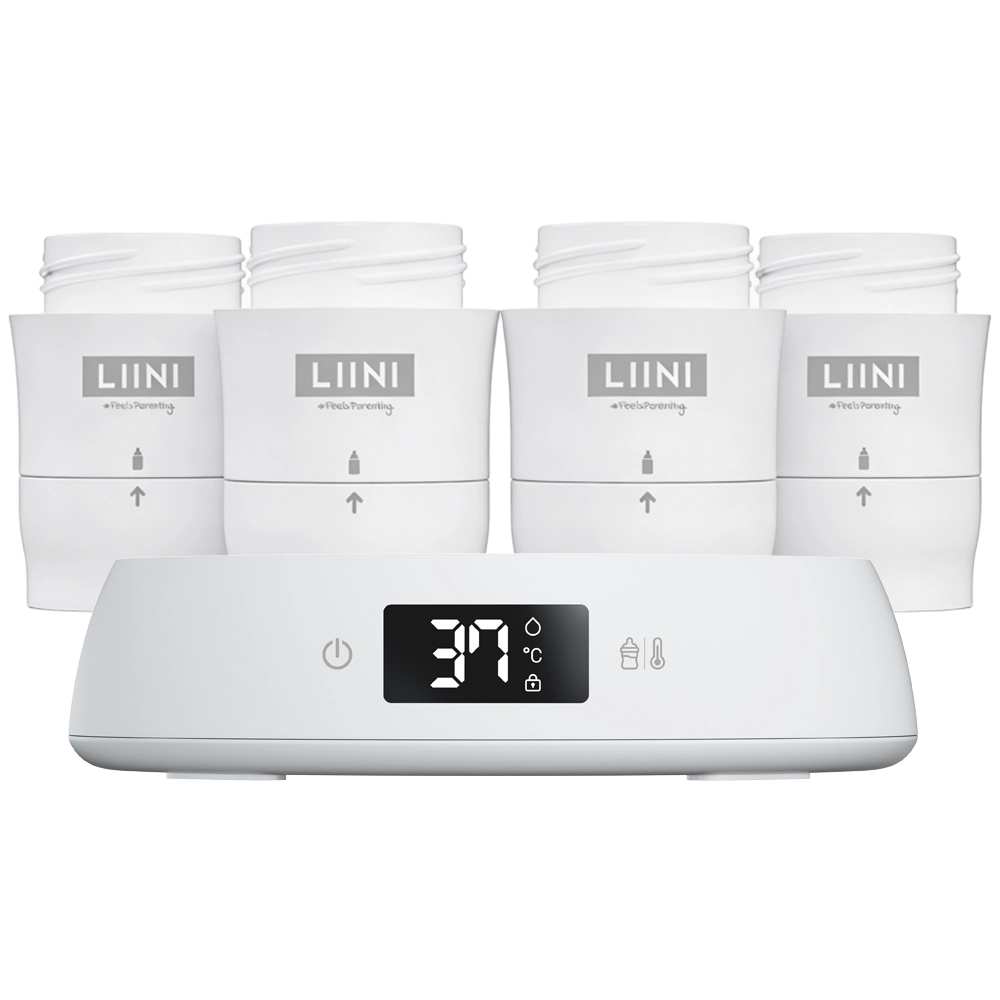 Formula Dispenser Avent
 Baby Bottle Bundle










Solid Foods: When to Start and How—With a Solid Food Schedule
When to Start Solid Foods? The Right Time, Signs of Readiness, the First Puree, and a Month-by-Month Solid Food Schedule Based on Swiss Recommendations, Including Differences Compared to Germany and Austria.
Contents
In short
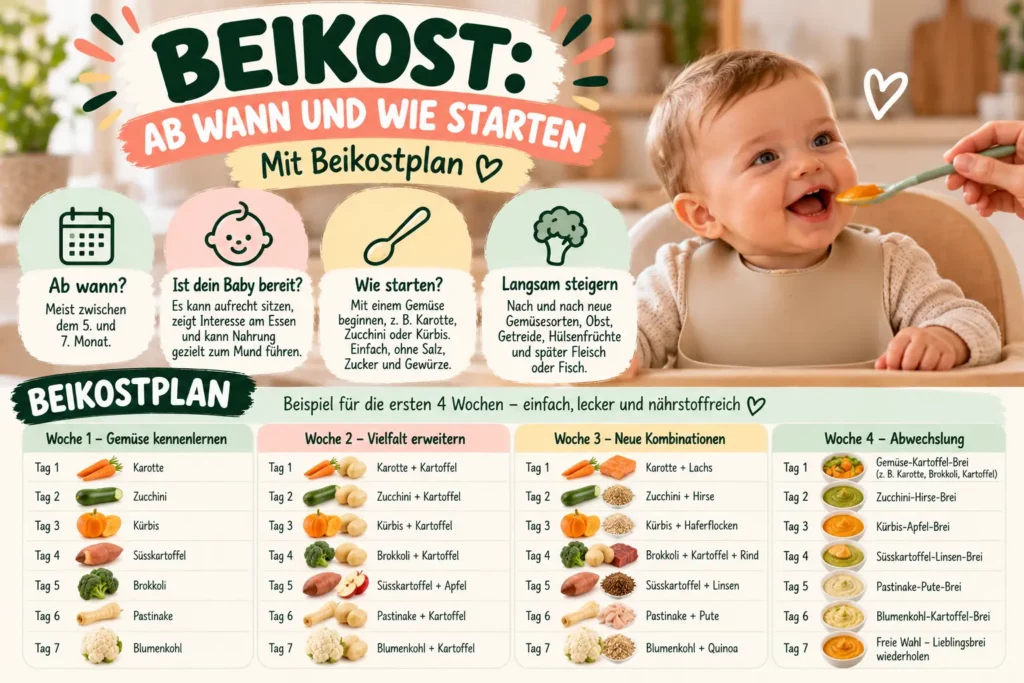
In Switzerland, you should start introducing solid foods no earlier than the beginning of the 5th month and no later than the beginning of the 7th month of life—that is, when your baby is between 4 and 6 months old. This is the recommendation of the BLV, the SGE, and Pediatrics Switzerland; the same timeframe applies in Germany. The key indicators are signs of readiness: Your baby can sit upright with support, hold their head up, and shows interest in food. Start with a few spoonfuls of vegetables or fruit, introduce meat, fish, or eggs by the 7th month at the latest, and continue breastfeeding or bottle-feeding as needed.
Solid foods are everything your baby eats and drinks in addition to breast milk or infant formula: baby food, soft pieces, and water. Here you’ll learn when it makes sense to introduce solid foods, how to get started, and what a monthly feeding plan looks like—including the differences compared to Germany and Austria.
When to Start Solid Foods? The Time Frame in Switzerland, Germany, and Austria
Swiss expert organizations agree: Solid foods should be introduced no earlier than the beginning of the 5th month and no later than the beginning of the 7th month of life. Pediatrics Switzerland explains what this means: after the end of the 4th month and no later than the end of the 6th month of life. You shouldn’t start any later than that, because starting at 7 months, your baby will need to get practically all of its iron from solid foods.
| State or Agency | At the earliest | At the latest | Special feature |
|---|---|---|---|
| Switzerland (BLV, SGE, Pediatrics Switzerland) | Start of the 5th month | Start of the 7th month | Start with vegetables or fruit most of the time |
| Germany (Gesund ins Leben, BIÖG) | Start of the 5th month | Start of the 7th month | Fixed Weaning Schedule, First Puree with Vegetables, Potatoes, and Meat |
| Austria (“Eating Right from the Start”) | Week 17 | Week 26 | Ideally start around the 6th month of life |
| WHO | – | – | Exclusive breastfeeding for 6 months, introduction of solid foods starting at 6 months |
Age alone isn’t the deciding factor: According to Austrian guidelines, your baby’s developmental stage determines the best time to start. If your baby was born prematurely, talk to your pediatrician about when to start.
Signs of readiness: Is your baby ready for baby food?
The BLV and SGE list the following signs:
- The baby sits upright with support and holds its head up on its own.
- It is interested in what you and others are eating.
- It reaches for things and puts them in its mouth on its own.
- It opens its mouth when the spoon comes near and swallows without choking.
If your baby keeps spitting out the baby food, it might still be too early. According to *Eating Right from the Start*, your baby is ready when he or she stops spitting out the food. Try again a few days later.
First Solid Foods: How to Get Started
In Switzerland, according to the SGE, you usually start with vegetables or fruits. Here’s how to proceed:
- Choose a meal. Start with one meal a day when you have time and can relax.
- Cooka vegetable —such as a carrot, parsnip, or zucchini—until soft, then puree it until smooth. Grated apple or mashed banana are also suitable, according to the BLV.
- A few spoonfuls are enough —it’s all about getting acquainted. Afterward, feed your baby breast milk or infant formula as usual.
- Expand slowly. Introduce new foods every few days. This way, according to “Kinder an den Tisch,” you can identify any intolerances.
- Add potatoes —they make the vegetable puree more filling.
- Meat, Fish, or Eggs By the 7th month at the latest, start regularly adding some meat, fish, or thoroughly cooked eggs to the diet, plus one teaspoon of canola oil per day.
Portion Size and Appetite: According to the BLV, you decide what goes on the table, and your child decides how much to eat. Don’t force your child to finish everything on their plate. If they refuse something, offer it again later—sometimes it takes several tries.
Whether you cook yourself or buy jarred baby food: According to the BLV, your baby is well-nourished either way. You can read about how to prepare, freeze, and reheat baby food in the guide “Making Your Own Baby Food.”
Month-by-Month Weaning Plan
This weaning plan follows the guidelines of the BLV and SGE; the quantities are taken from SGE Fact Sheet 2024. It is intended as a guide, not a rigid schedule.
| Age | What’s included | Solid food meals per day |
|---|---|---|
| Starting at 5 months (at the earliest) | a few spoonfuls of finely pureed vegetables or fruit; then potatoes | a few spoonfuls to get used to the taste |
| No later than the 7th month | One full meal in place of a breastfeeding or bottle-feeding session: vegetables, potatoes, 10 g of meat or fish or ¼ of an egg, 1 teaspoon of canola oil per day; plus grains, bread, pasta, and legumes; a small amount of whole milk or yogurt in the porridge; first finger foods | up to 8 months, 2 to 3 |
| 9th to 11th month | Vegetables and fruits 1 to 2 times a day, 20 g of meat or fish or ½ an egg; food coarser, mashed, or cut into small pieces | 3 to 4 |
| 10th to 12th month | Transition to family meals, unsalted; porridge is no longer necessary | 3 to 4 |
| Ages 1 and up | Family meals; cow’s milk as a beverage | 3 to 4 meals, plus 1 to 2 snacks as needed |
Breastfeeding and Bottle-Feeding: According to the BLV, you can continue breastfeeding alongside solid foods for as long as you and your child wish; the WHO recommends continuing until age 2 or longer. You should continue to give infant formula in a bottle until the end of the first year of life.
Good to Know
In Germany, the introduction of solid foods usually follows the BIÖG’s set schedule: a vegetable-potato-meat puree for lunch (5th to 7th month), a whole-milk-cereal puree for dinner (6th to 8th month), and a cereal-fruit puree for an afternoon snack (7th to 9th month). In Austria, according to “Eating Right from the Start,” food becomes coarser between 6 and 9 months and is cut or chopped between 9 and 12 months.
Allergens, Iron, and Beverages
Don’t Delay Introducing Allergens
Waiting to introduce solid foods does not protect against allergies, according to the BLV. You also don’t need to delay introducing fish, eggs, or gluten. According to the SGE, fish actually reduces the risk of allergies during the first year of life. Pediatrics Switzerland recommends introducing gluten-containing grains between the 5th and 7th month of life. According to “Kinder an den Tisch,” the same applies to children at risk for allergies. If your baby already has an allergy or severe eczema, discuss when to start with your pediatrician.
Warning
If your baby develops a rash or vomits after trying a new food, contact your pediatrician. If their lips or face swell up or they have trouble breathing, call emergency services immediately at 144 (112 in Germany and Austria).
Iron: Important Starting No Later Than the 7th Month
According to the BLV, start giving your child small amounts of meat regularly starting no later than the 7th month—preferably lean meat rather than sausage. Fish, eggs, whole grains, and legumes also provide iron. According to the SGE, vitamin C from vegetables and fruits helps the body absorb iron from plant sources more effectively. If you follow a vegetarian diet, replace meat with oat or millet flakes, as recommended by Gesund ins Leben. Pädiatrie Schweiz does not recommend a vegan diet for infants.
Drinks: Water from a cup
According to the Early Childhood Counseling Service for Mothers and Fathers (Frühe Kindheit Ost), you can offer plain tap water with meals right from the start. Once your baby is eating at least three meals a day, they’ll need something extra to drink: water or unsweetened herbal or fruit tea, preferably from a cup. According to the BLV, fruit juice, sweetened beverages, and caffeinated drinks are not suitable. To find out which water is suitable, see “Which Water Is Best for Baby Food?”
What to Avoid in the First Year
These foods are unsuitable for babies due to bacteria, excessive salt content, or the risk of choking:
- Honey and maple syrup: may contain bacteria and spores. Do not give honey before the child’s first birthday.
- Salt, bouillon, spices, sugar, sweeteners: According to the BLV, omit these when cooking for babies.
- Whole nuts: until the child’s third birthday, use only finely ground nuts.
- Whole grapes and cherry tomatoes, cherries with pits, hard raw vegetable and apple pieces, popcorn, bread with seeds, fish with bones, candy: choking hazard. According to the NHS, cut grapes and cherry tomatoes into quarters; grate or steam hard foods.
- Raw animal products: raw milk, raw eggs, raw fish, undercooked meat, raw sausage, soft cheese.
- Cow’s milk as a beverage: not until after the child’s first birthday; in baby food starting at 7 months, in small amounts.
- Rice drinks: not recommended; rice cakes and rice porridge should be consumed only in moderation due to arsenic.
Squeeze pouches are no substitute for fresh fruit. According to Austrian recommendations, giving them to children too often can delay the process of learning to eat.
Purees, Finger Foods, and Daily Life
According to the BLV, you can offer solid foods as purees or as finger foods. With finger foods, your child decides for themselves what and how much to eat. Purees are better at ensuring an adequate supply of energy and nutrients. According to the SGE, finger foods are appropriate no earlier than 7 months of age, once your child’s motor skills are developed enough, and only under supervision. To learn how to introduce solid foods without purees, read the guide on baby-led weaning.
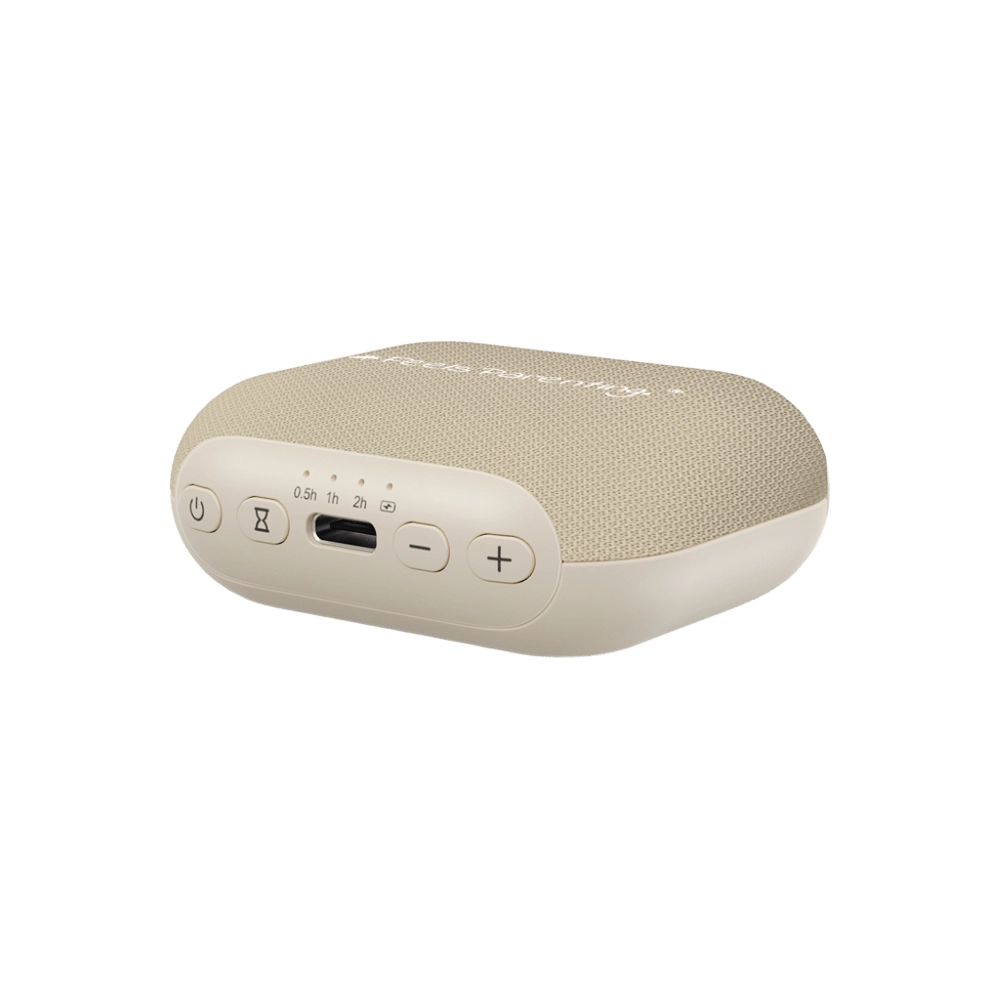
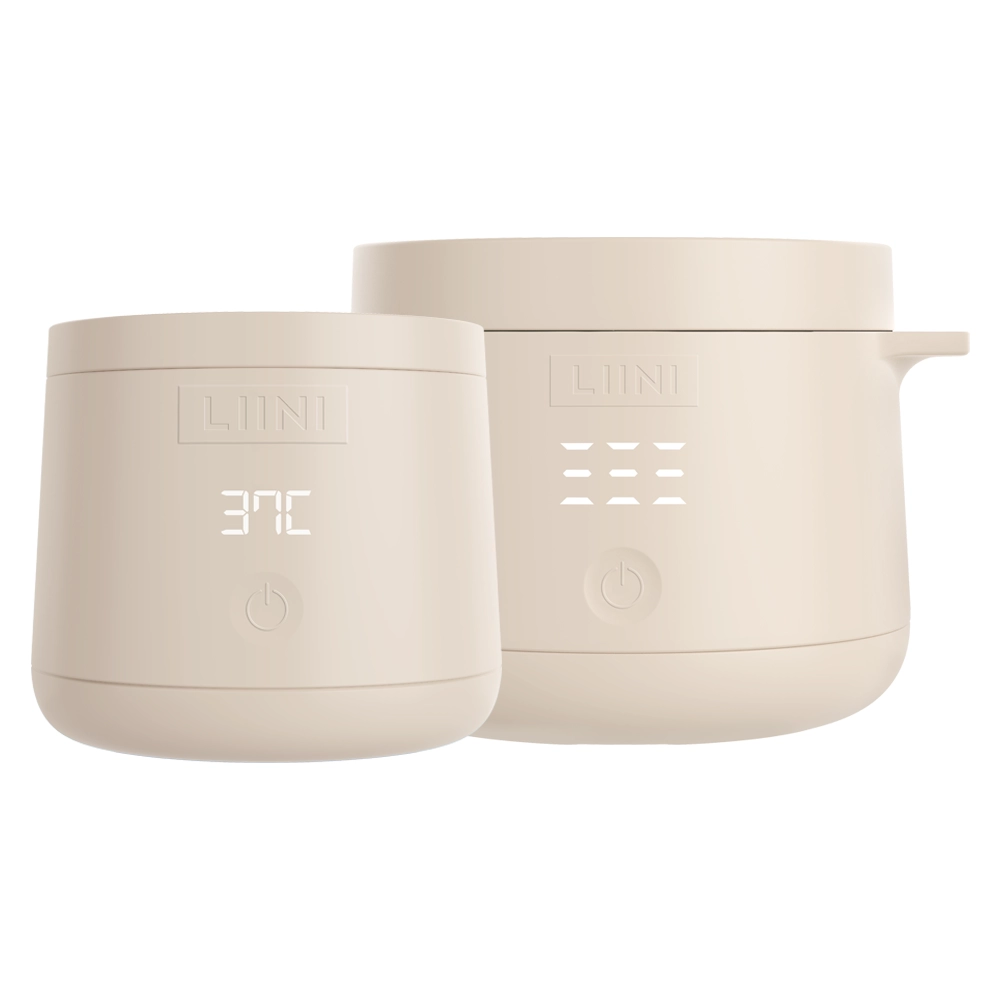
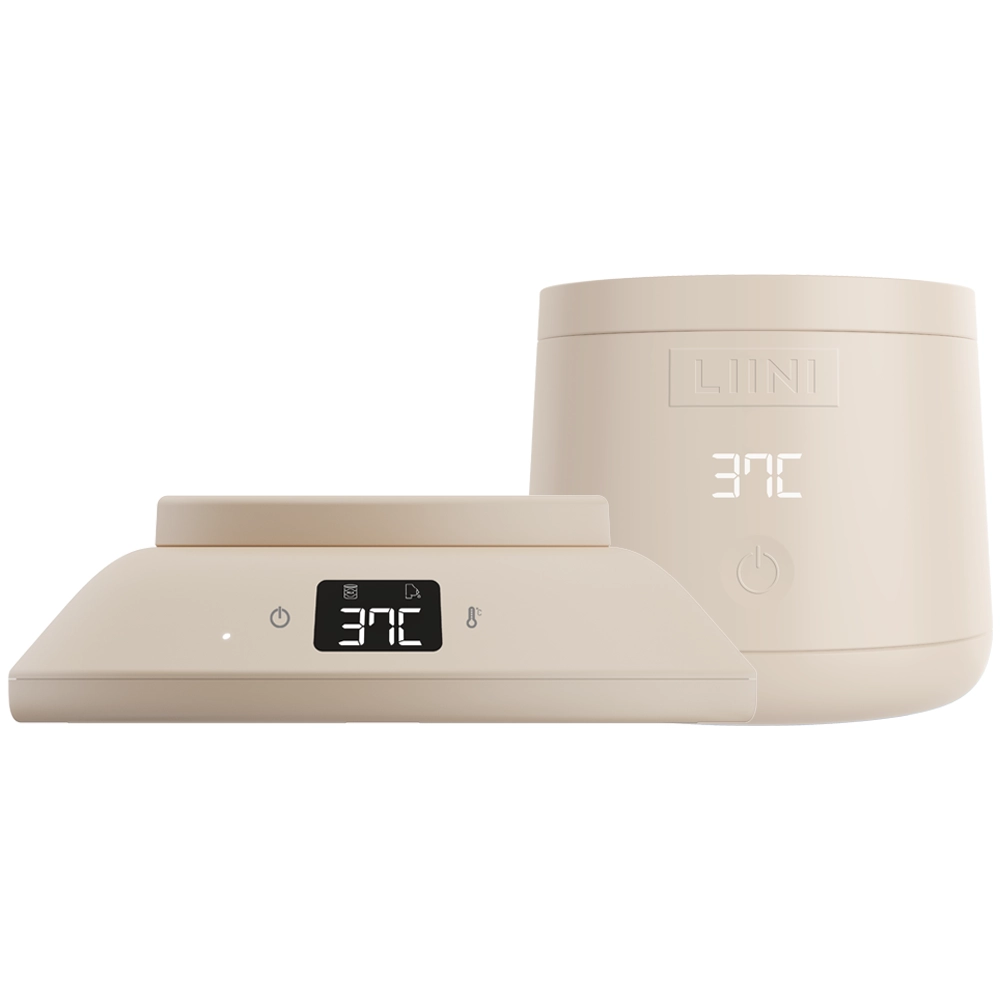
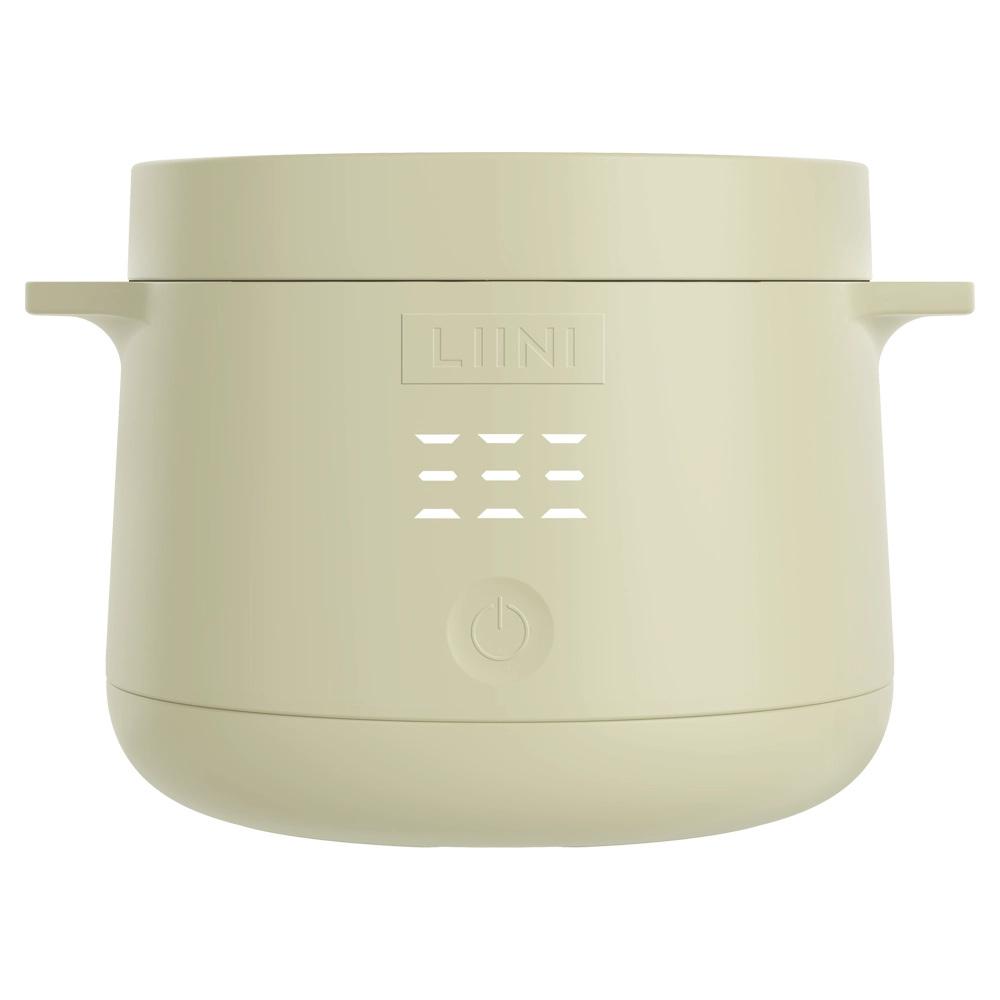
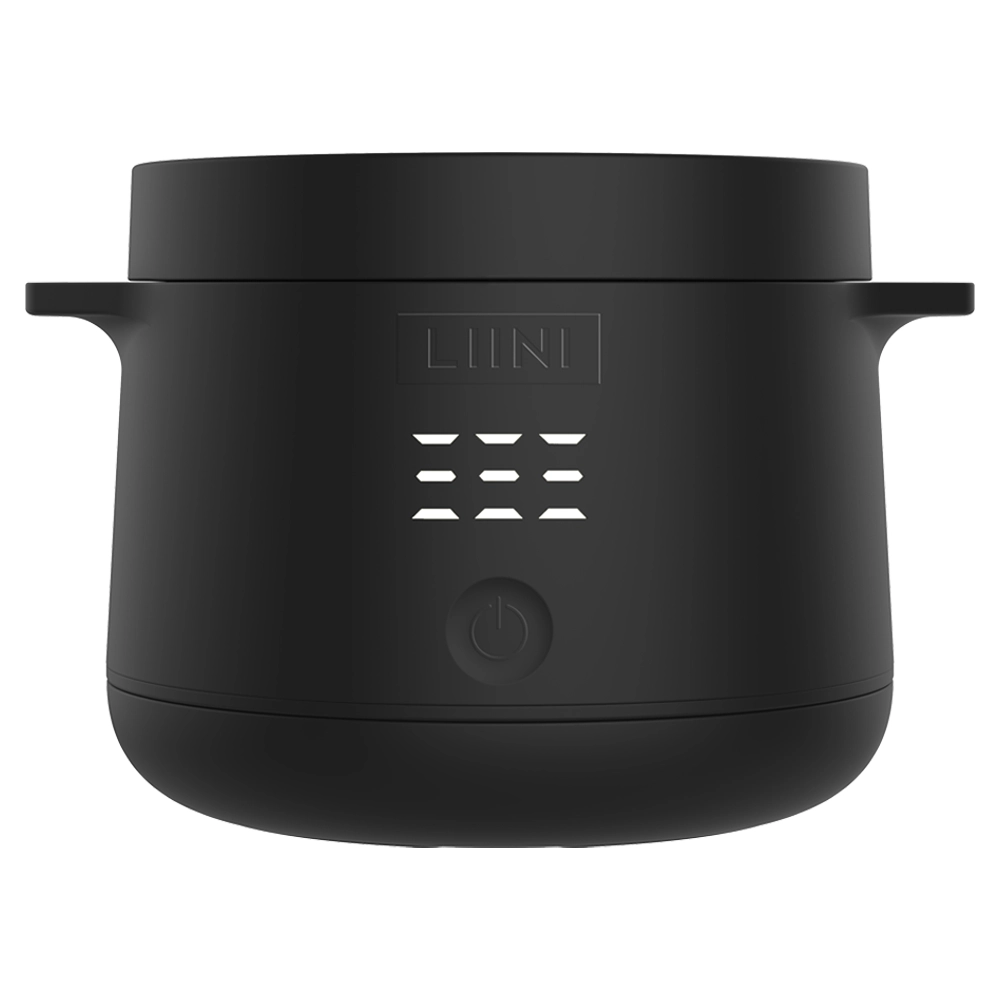
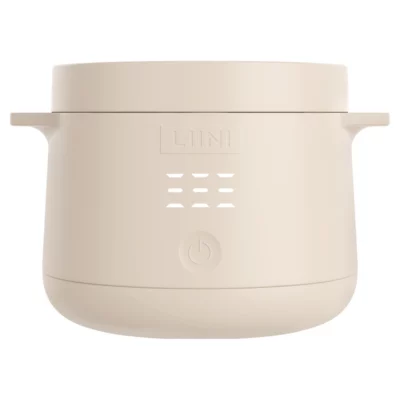
When you’re on the go, all you need is a small jar and a spoon—or you can bring along a portable baby food warmer. The LIINI® 2.0 PRO baby food warmer holds up to 350 g of baby food, warms it without needing to adjust the temperature, and charges via USB-C. According to LIINI, it’s suitable for both store-bought and homemade baby food. For tips on how to transport and warm up baby food hygienically, check out the guide “Warming Up Baby Food on the Go.” You’ll find recipe ideas for your baby’s first meals at “Cooking with LIINI.”
Frequently Asked Questions
When can my baby start eating baby food?
No earlier than the beginning of the 5th month of life and no later than the beginning of the 7th month of life—that is, between 4 and 6 months of age. This is the recommendation of the BLV, SGE, and Pediatrics Switzerland. More important than the exact date are the signs of readiness: sitting upright, showing interest in food, and opening their mouth for the spoon.
Which baby food should I start with?
In Switzerland, babies usually start with finely pureed vegetables such as carrots, parsnips, or zucchini, or with fruits such as grated apple. Potatoes are introduced next, followed by meat, fish, or eggs—and a little canola oil—no later than the 7th month. In Germany, the first baby food is usually a vegetable-potato-meat puree.
How much baby food does my baby need at first?
A few spoonfuls. It’s about getting used to the new food, not about filling up. Afterward, your baby will have breast milk or a bottle as usual. Your baby will let you know when they’ve had enough.
Do I need to delay introducing allergens like eggs or fish?
No. According to the BLV, avoiding or delaying the introduction of foods like fish or gluten does not protect against allergies. According to the SGE, introducing fish during the first year of life may even reduce the risk of allergies. Introduce new foods a few days apart; this will make it easier to identify any intolerances.
When should I start giving my baby extra water?
You can offer still water with meals once you start introducing solid foods, preferably from a cup. It becomes necessary at the latest when your baby is eating three meals a day.
Can I give my baby jarred baby food, or do I have to cook it myself?
Both are fine. According to the BLV, your baby will get all the nutrition they need from homemade baby food and jarred baby food. Jarred baby food is convenient for when you’re on the go, and you can easily prepare homemade baby food in advance and freeze it.
When can my baby start drinking cow’s milk?
As a beverage, only after their first birthday. According to the BLV, starting at 7 months, you can use small amounts of whole milk or yogurt in a porridge, such as a milk-and-grain porridge. Until then, breast milk or infant formula remains the main beverage.
What should I do if my baby refuses the porridge?
Stay calm and try again a few days later. Sometimes it takes several attempts to introduce a new food. If your baby isn’t showing any signs of being ready yet, it might still be too early. If you have any concerns, the parenting counseling service or your pediatrician can help.
Sources
- Nutrition for Infants and Toddlers (Brochure, 2020, PDF), Federal Office for Food Safety and Veterinary Affairs (BLV)
- Introducing Solid Foods: Bringing Children to the Table (Information resource in collaboration with the BLV and Health Promotion Switzerland)
- Allergy Prevention, Kids at the Table
- Unsuitable Foods, Kids at the Table
- Fact Sheet: Nutrition for Infants in Their First Year of Life (2024, PDF), Swiss Society for Nutrition (SGE)
- Handbook on Eating and Drinking in the First Year of Life (2018, PDF), SGE and Health Promotion Switzerland
- Recommendations for Infant Nutrition (2017, PDF), Swiss Pediatric Nutrition Commission
- Nutrition from 0 to 12 Months, Early Childhood East (Parenting Counseling)
- Introducing Solid Foods, kindergesundheit-info.de, Federal Institute for Public Health
- Vegetable-Potato-Meat Puree, “Gesund ins Leben” Network
- Solid Foods: Eating Right from the Start (AGES, Ministry of Social Affairs, Federation of Social Insurance Institutions)
- Complementary Feeding Recommendations: When Babies Start Eating, Austrian Health Portal
- Infant and Young Child Feeding, World Health Organization (WHO)
- Food Allergies, NHS Best Start in Life
- Foods and drinks to avoid, NHS Best Start in Life
- Preparing Food Safely, NHS Best Start in Life
- Emergency number 144 for all medical emergencies, Alertswiss, Federal Office for Civil Protection
- 112: the European emergency number, European Commission
- First Aid: Inhalation of Foreign Objects, FOPH—Greater Safety for Children