
 4.0 PRObattery · on the go
 Home 230Vfor home
 Baby food warmersfrom 6 months
 Night Stationfor the night




 Cleaning Wipes Monthly Pack
 Home & 2Go Bundle
 Formula Dispenser Avent
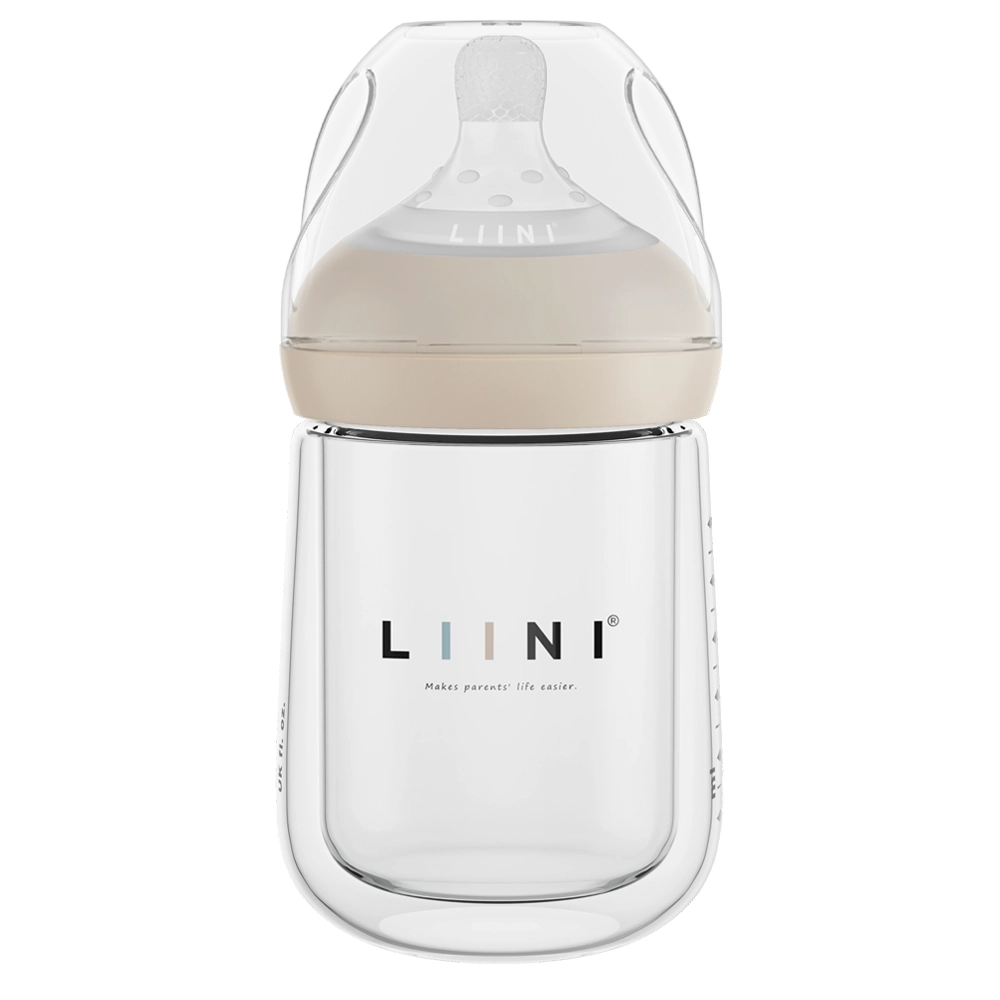
 Baby Bottle Bundle










Recognizing and Relieving Milk Congestion, Milk Blisters, and Mastitis
Clogged ducts, milk blisters, or mastitis? How to recognize them, what helps right away, which old tips are outdated, and when to seek medical help.
Contents
In short
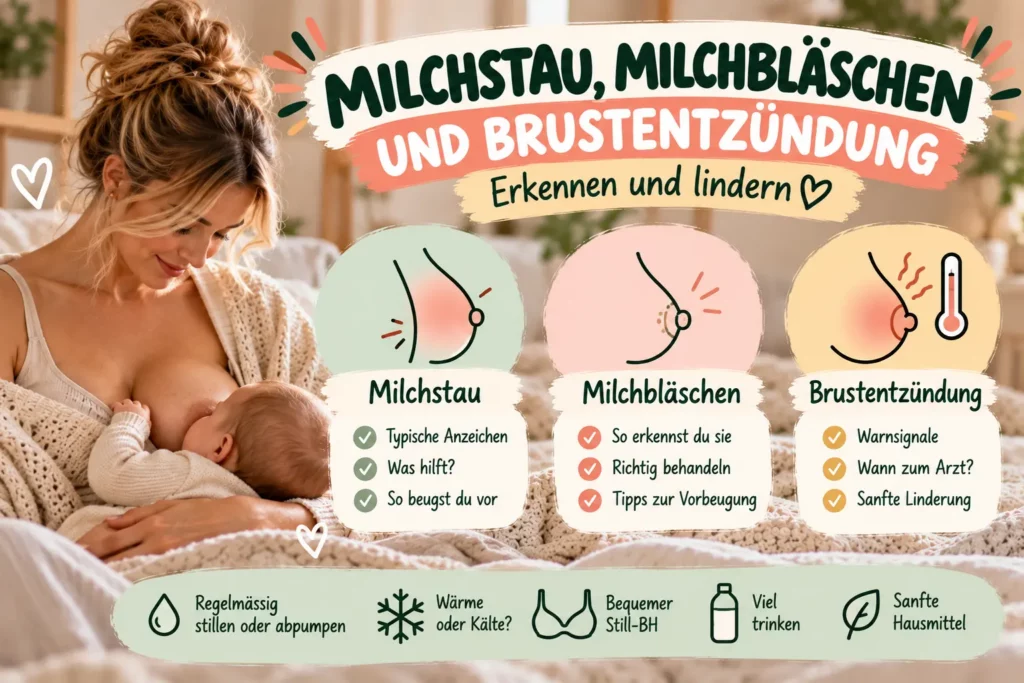
A milk engorgement is a painful, often reddened, and hard area in the breast, usually without a fever. If fever, chills, and flu-like symptoms are present, it is referred to as mastitis. A milk blister is a tiny white or yellowish spot on the nipple. According to the current recommendations from the Academy of Breastfeeding Medicine, the following can help: continue breastfeeding as needed, apply cold compresses, gently stroke the skin instead of massaging it vigorously, avoid pumping to empty the breast, and get plenty of rest. If the condition does not improve after 24 hours or if you feel sick, see your doctor.
A spot in your breast suddenly feels hard, warm, and painful: that’s how a milk engorgement begins. Sometimes this develops into mastitis, which is an inflammation of the breast accompanied by a fever. Both conditions are uncomfortable but easily treatable, and you can usually continue breastfeeding. Here you’ll learn how to tell them apart, what’s known to help based on current research, and which old tips are outdated.
Milk Engorgement, Mastitis, Milk Blisters: The Differences
Experts now view milk stasis and mastitis as a spectrum. This is described in Protocol No. 36 of the Academy of Breastfeeding Medicine (ABM) from 2022, which serves as a guideline for institutions such as the Winterthur Cantonal Hospital. It all starts with inflammation: the tissue swells and narrows the fine milk ducts. This can develop into mastitis, more rarely a bacterial infection, and even more rarely an abscess. Incidentally, according to the ABM, there is no such thing as a “plug” that blocks a milk duct. That’s why forceful expression doesn’t help.
| What | Typical Signs | General well-being | What Usually Helps |
|---|---|---|---|
| Milk Engorgement | A hard, tender area, often reddened and warm | Generally good; at most, a slightly elevated temperature | Continue breastfeeding, apply cold compresses, rest |
| Breast infection (mastitis) | Severe pain, redness, swelling, sometimes a wedge-shaped hard area | Fever, chills, body aches, flu-like symptoms | Same as with milk engorgement; consult a doctor |
| Milk blisters | A tiny white or yellowish dot on the nipple; may cause a stinging sensation | good | Leave it alone; do not puncture it |
| Milk cyst (galactocele) | A milk-filled, usually painless lump | good | Have it checked out; often, simply monitoring the situation is enough |
| Abscess | A hard, painful lump filled with fluid, usually following mastitis | Varies; sometimes without a fever | Medical treatment, usually drainage |
Warning
See a doctor or contact your midwife if you have a fever, chills, or flu-like symptoms; if your condition doesn’t improve after 24 hours despite taking steps to manage it; if both breasts are affected; or if your baby is no longer breastfeeding. If you feel confused, are breathing very rapidly, or if your skin is blotchy, bluish, or very pale, call emergency services immediately at 144 (112 throughout Europe). These can be signs of blood poisoning (sepsis).
Causes: How a Milk Blockage Develops
A milk blockage occurs when milk does not drain properly from a specific area of the breast, causing the tissue to swell. According to the NHS, the Office for Youth and Career Guidance of the Canton of Zurich, and the ABM, typical triggers include:
- Long breaks: A breastfeeding session is skipped, or your baby suddenly sleeps longer.
- Latching: Your baby isn’t latched on properly.
- Too much milk: According to ABM, overproduction can lead to swelling and inflammation. Pumping a lot of extra milk can make these symptoms worse.
- Pressure: Tight clothing or a bra with underwire.
- Other triggers: sore nipples, weaning too quickly, stress, and exhaustion.
Relieving Breast Engorgement: What Helps Today
The good news: According to ABM, a breast infection without bacteria usually clears up completely without antibiotics. Here’s what to do:
- Continue breastfeeding as usual. Breastfeed your baby on demand, including on the sore side, but no more frequently than usual (ABM). Make sure your baby latches on properly.
- Apply a cold compress: Place a cold, damp cloth or a wrapped ice pack on the area. The NHS recommends 10 minutes per hour. Never place ice directly on the skin, and avoid the nipple (Winterthur Cantonal Hospital).
- Gently stroke instead of kneading. Use the flat of your hand to stroke the skin lightly, moving away from the breast toward the armpit and collarbone. Lymph nodes are located there, through which tissue fluid drains. The Cleveland Clinic compares the pressure to petting a cat.
- Don’t pump extra Only pump if your baby can’t feed at the breast or if you’re separated, and then only as much as your baby needs (NHS, ABM).
- A well-fitting bra: A supportive, non-restrictive bra takes the strain off your breasts.
- Relieving Pain: Anti-inflammatory pain relievers can help relieve pain and swelling (ABM, NHS). Ask your doctor or pharmacist which medication is suitable for you while breastfeeding.
- Rest and Support Lie down with your baby, drink plenty of fluids, and arrange for help with household chores and family responsibilities, as recommended by La Leche League Switzerland.
Good to Know
If your breast is so swollen that hardly any milk is flowing, ABM recommends that you temporarily breastfeed on the other side and offer the affected side again as soon as the swelling subsides. Discuss this with your midwife or lactation consultant.
What You Should Avoid: Outdated Tips
Much of this advice dates back to a time when people believed in blocked milk ducts. As a result, the ABM significantly revised its recommendations in 2022. In Switzerland, for example, they draw on an overview by specialists at the University Hospital of Zurich and the guidelines from the Winterthur Cantonal Hospital. However, some fact sheets still contain the old advice. Here’s what you should avoid today:
- Vigorous massage or expressing milk: According to ABM, deep, painful massage increases inflammation and swelling, can damage the tissue, and is considered a risk factor for an abscess. She also advises against using massage devices.
- Pumping to empty the breasts or pumping afterward: This further stimulates milk production and can worsen the swelling (ABM).
- Heat as a treatment: Heat dilates blood vessels and, according to ABM, can worsen symptoms, even though some women find it pleasant. Some sources, such as kindergesundheit-info.de and La Leche League Switzerland, still recommend warming the breast before breastfeeding. If swelling increases afterward, it’s better to apply a cold compress.
- Oils, baths, and creams on the breast: The NHS advises against these. According to ABM, castor oil or salt baths can damage the skin.
- Nipple shields: According to ABM, there is no evidence that they help.
- Sudden weaning: This can make symptoms worse (NHS).
Milk blisters: the white spot on the nipple
A milk blister looks like a tiny white or yellowish spot on the nipple, according to La Leche League UK. It can cause a sharp stinging pain during breastfeeding and sometimes obstruct the flow of milk. Little research has been done on why it occurs. Factors that may contribute to its development include overproduction, a sore nipple, breast engorgement, or exclusive pumping.
- Painless? If it doesn’t interfere with milk flow, leave the blister alone. It will go away on its own over time (La Leche League UK).
- Don’t puncture it: Don’t open it with a needle. This damages the skin and, according to ABM, can further narrow the milk duct.
- Get help: If it’s very painful or blocking milk flow, ask your midwife, lactation consultant, or doctor. Your doctor can, for example, prescribe an anti-inflammatory ointment (ABM).
Tip
If you keep getting milk blisters or clogged ducts, it’s worth seeking breastfeeding counseling. Sometimes this is caused by overproduction or a latching problem, which can be resolved.
Breast Infection: When to See a Doctor
A breast engorgement often improves within one to two days with the right measures (Cleveland Clinic). You should seek medical help if it doesn’t get better or even gets worse after 24 hours (ABM, La Leche League Switzerland, BIÖG). The NHS advises contacting your primary care physician if there is no improvement after 12 to 24 hours. Other reasons include fever, chills, or flu-like symptoms; according to La Leche League Switzerland, this includes a fever above 38.5 °C lasting for 24 hours. You should also seek medical attention if both breasts are affected, your baby is no longer nursing (La Leche League Switzerland), or antibiotics are not working after 48 hours (NHS).
What the doctor does: She examines your breast, and if an abscess is suspected, she may also perform an ultrasound (Winterthur Cantonal Hospital). According to ABM, antibiotics are only necessary if bacteria are involved. There are antibiotics that are compatible with breastfeeding.
Abscess: According to ABM, 3 to 11 percent of women with acute mastitis develop an abscess, which is a collection of pus. It is often drained with a needle or through a small tube. Continuing to breastfeed afterward is recommended.
Lumps or redness that persist: According to La Leche League International, most lumps that occur during breastfeeding are milk-filled glands or inflammation. If a lump does not go away after about a week of treatment, have it checked out anyway. The same applies to redness that does not improve after 7 to 10 days despite antibiotics, and to engorgement that keeps recurring in the same spot (La Leche League International, ABM). In rare cases, this may be caused by a form of breast cancer that resembles an infection. You can read about how to examine your breasts in the guide “Breast Self-Examination—Even During Pregnancy and Breastfeeding.”
Continuing to Breastfeed and Getting Help in Switzerland
Your milk is safe for your baby, even if you have bacterial mastitis, an abscess, or are taking antibiotics (ABM). A breast infection does not mean you have to stop breastfeeding, according to the German Federal Institute for Public Health (BIÖG). You can find help here:
- Midwife: In the first few weeks after giving birth, she’ll visit you at home and help you with breastfeeding. You can find out what’s covered by basic insurance in the guide “Postpartum Care: What Midwives and Health Insurance Providers Cover.”
- Breastfeeding Counseling: Basic health insurance covers three breastfeeding counseling sessions with a midwife or a specially trained nurse (FOPH, as of October 2026), according to the Swiss Midwives Association, throughout the entire breastfeeding period. You can find breastfeeding and lactation consultants in the directory of the professional association BSS.
- La Leche League Switzerland: It offers breastfeeding counseling, including by phone.
If you need to temporarily pump due to a milk engorgement or mastitis, your basic health insurance may cover the cost of a rental pump with a doctor’s prescription; see “Does Health Insurance Cover a Breast Pump?” You can find tips on pumping under “Pumping and Storing Breast Milk.”
In Germany and Austria, midwives, lactation consultants, and La Leche Liga also provide support; health insurance coverage is regulated differently there.
Frequently Asked Questions
How long does a milk engorgement last?
With the right measures, a milk engorgement often improves within one to two days. If it doesn’t get better after 24 hours or if you develop a fever, seek medical help.
Heat or cold for a milk engorgement?
Cold. According to ABM, ice or cold compresses relieve pain and swelling, while heat can worsen the symptoms. Apply a cool cloth or a wrapped ice pack—never place ice directly on the skin. Some guides still recommend applying heat before breastfeeding; if the swelling increases afterward, it’s better to use cold.
Should I pump when I have a milk engorgement?
Don’t pump more than necessary. Over-pumping stimulates milk production and can make the swelling worse (ABM). Only pump when your baby can’t feed or when you’re separated, and then only as much as your baby needs.
Can I continue breastfeeding if I have mastitis?
Yes. Your milk won’t harm your baby, even if you have a bacterial infection or are taking breastfeeding-safe antibiotics (ABM). Suddenly stopping breastfeeding, on the other hand, can make the symptoms worse.
Does mastitis always require antibiotics?
No. Many cases of inflammation subside with cooling, rest, continued breastfeeding, and anti-inflammatory pain relievers (ABM). Antibiotics are necessary if bacteria are involved—for example, if the condition does not improve after 24 hours despite these measures. Your doctor will decide.
Can I lance a milk blister?
No. According to ABM, piercing the blister damages the skin and can further narrow the milk duct. Painless blisters usually go away on their own. If you’re experiencing severe pain, your midwife, lactation consultant, or doctor can help you.
Sources
- Clinical Protocol #36: The Mastitis Spectrum, Revised 2022 (PDF), Academy of Breastfeeding Medicine
- Mastitis During Breastfeeding: Information Sheet for Mothers (PDF), Academy of Breastfeeding Medicine
- Clinical Protocol No. 30: Breast Lumps and Imaging in Breastfeeding Women (PDF), Academy of Breastfeeding Medicine
- Puerperal Mastitis, Clinical Guideline, Winterthur Cantonal Hospital
- Breastfeeding in Practice: Fundamental Aspects and Common Conditions During Breastfeeding, University Hospital Zurich, Gynecology + Obstetrics 2022
- Breastfeeding Facts: Milk Stasis and Mastitis, La Leche League Switzerland
- Milk Engorgement and Mastitis, Office for Youth and Career Counseling, Canton of Zurich
- Breastfeeding Problems, kindergesundheit-info.de, BIÖG
- Mastitis, NHS
- Sepsis, NHS
- Nipple pain: blebs and milk blisters, La Leche League GB
- Lumps and Breast Imaging, La Leche League International
- Mastitis, Cleveland Clinic
- Clogged Milk Duct, Cleveland Clinic
- Health Insurance: Maternity Benefits, Federal Office of Public Health (FOPH)
- List of Medications and Medical Devices, July 1, 2026 edition (PDF), Federal Office of Public Health (FOPH)
- Health Insurance Coverage for Breastfeeding Counseling, Swiss Midwives Association
- Directory of Lactation Consultants, Professional Association of Swiss Lactation Consultants (BSS)