
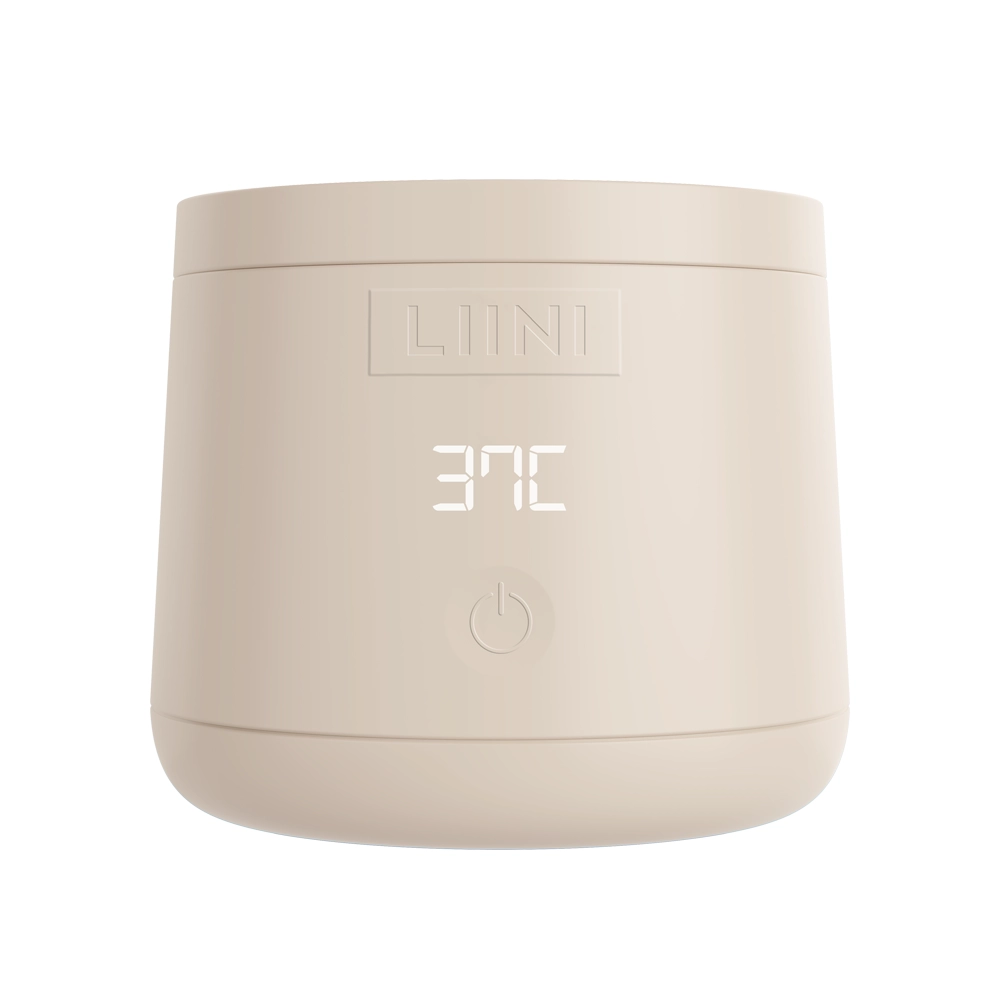
 4.0 PRObattery · on the go
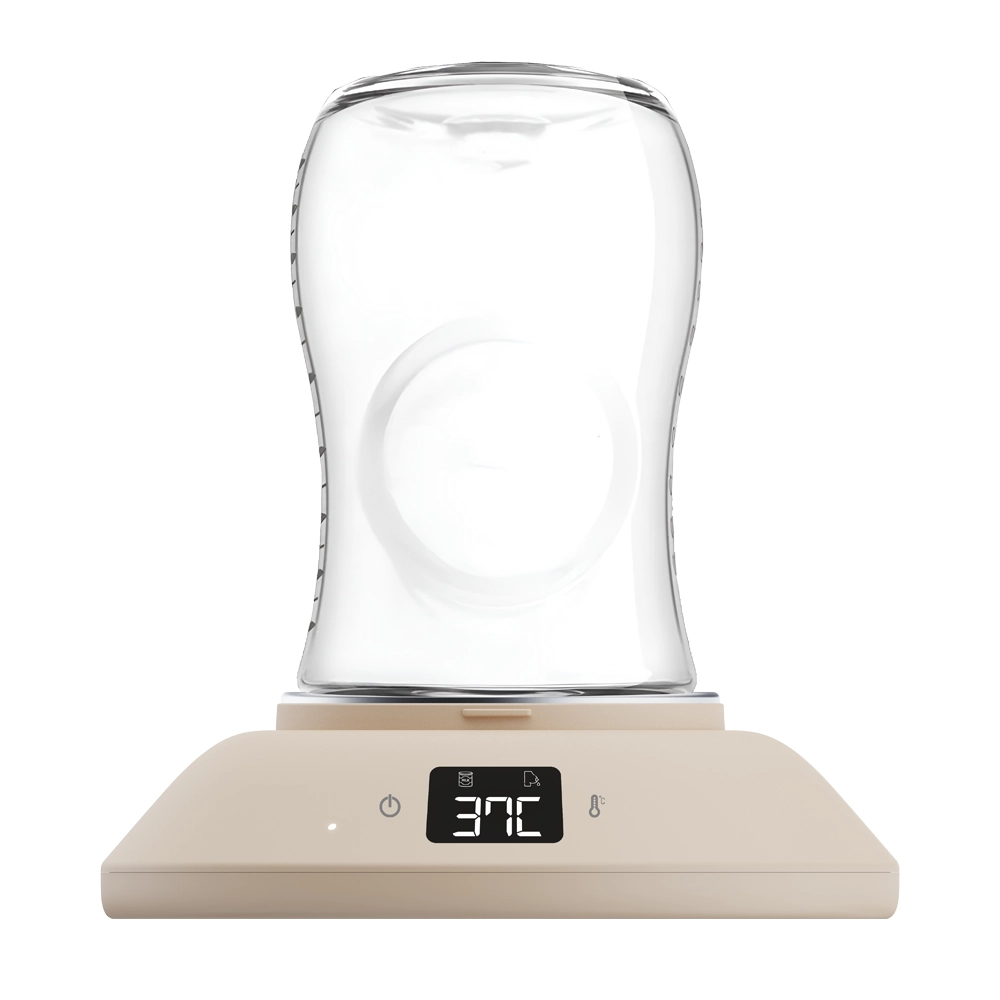 Home 230Vfor home
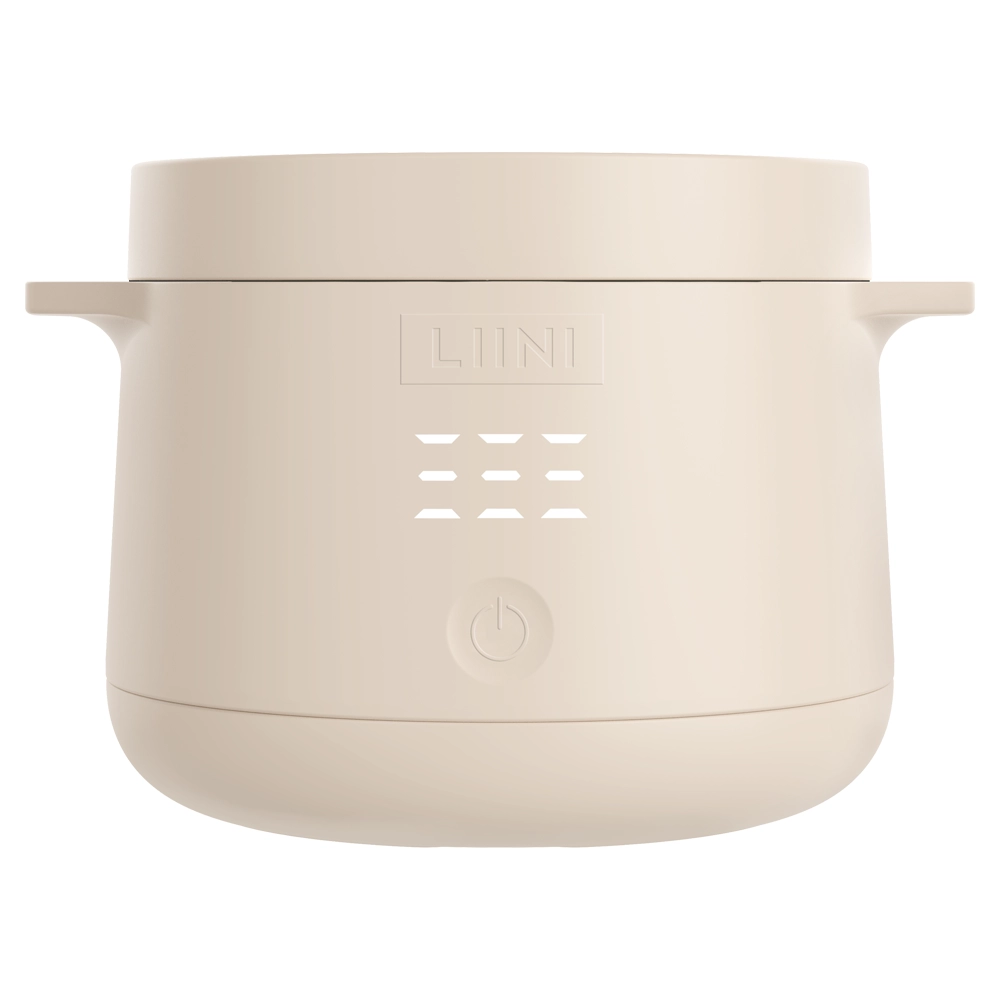 Baby food warmersfrom 6 months
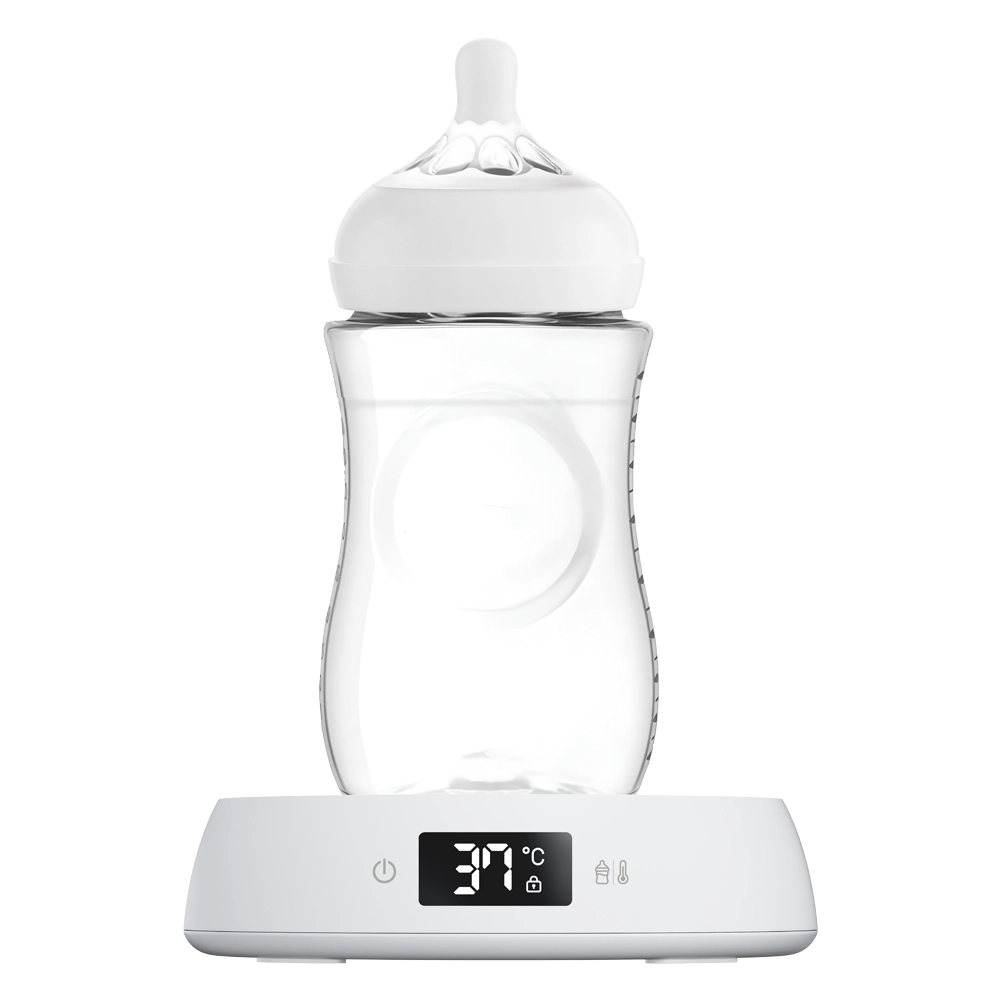 Night Stationfor the night




 Cleaning Wipes Monthly Pack
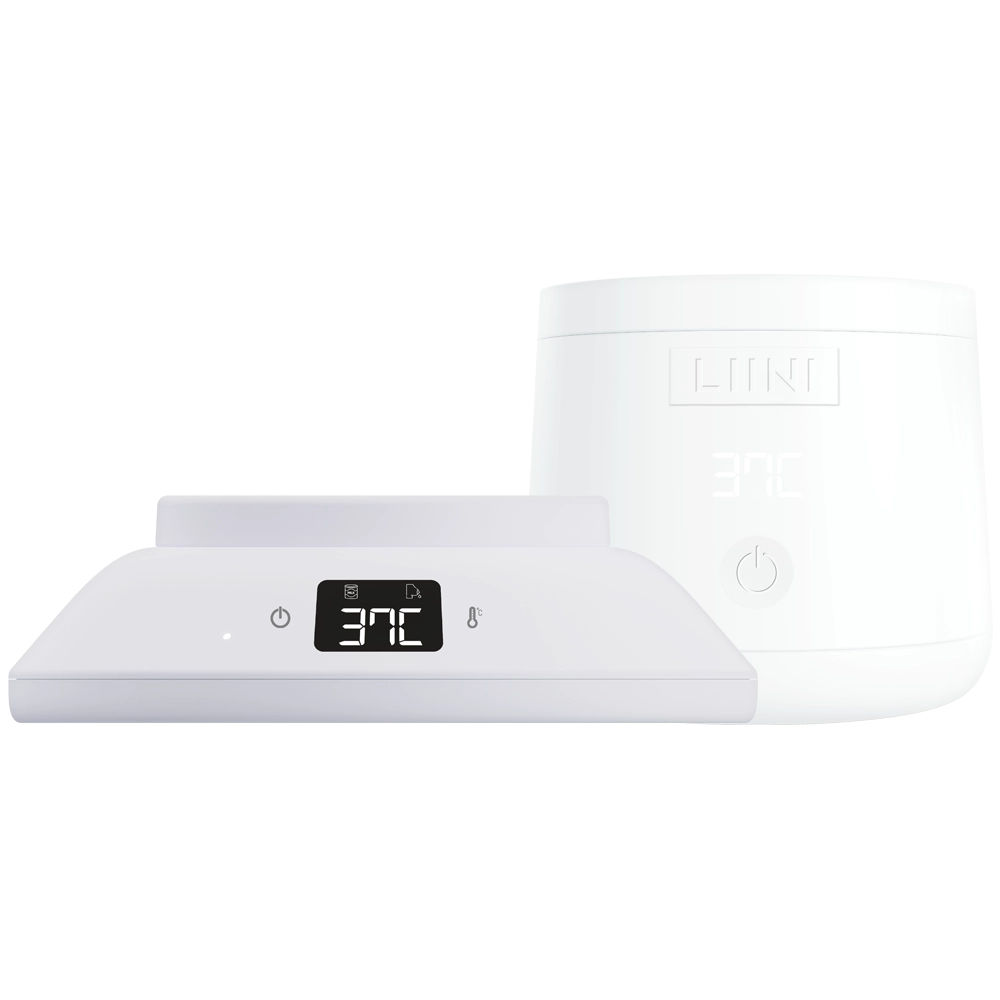 Home & 2Go Bundle
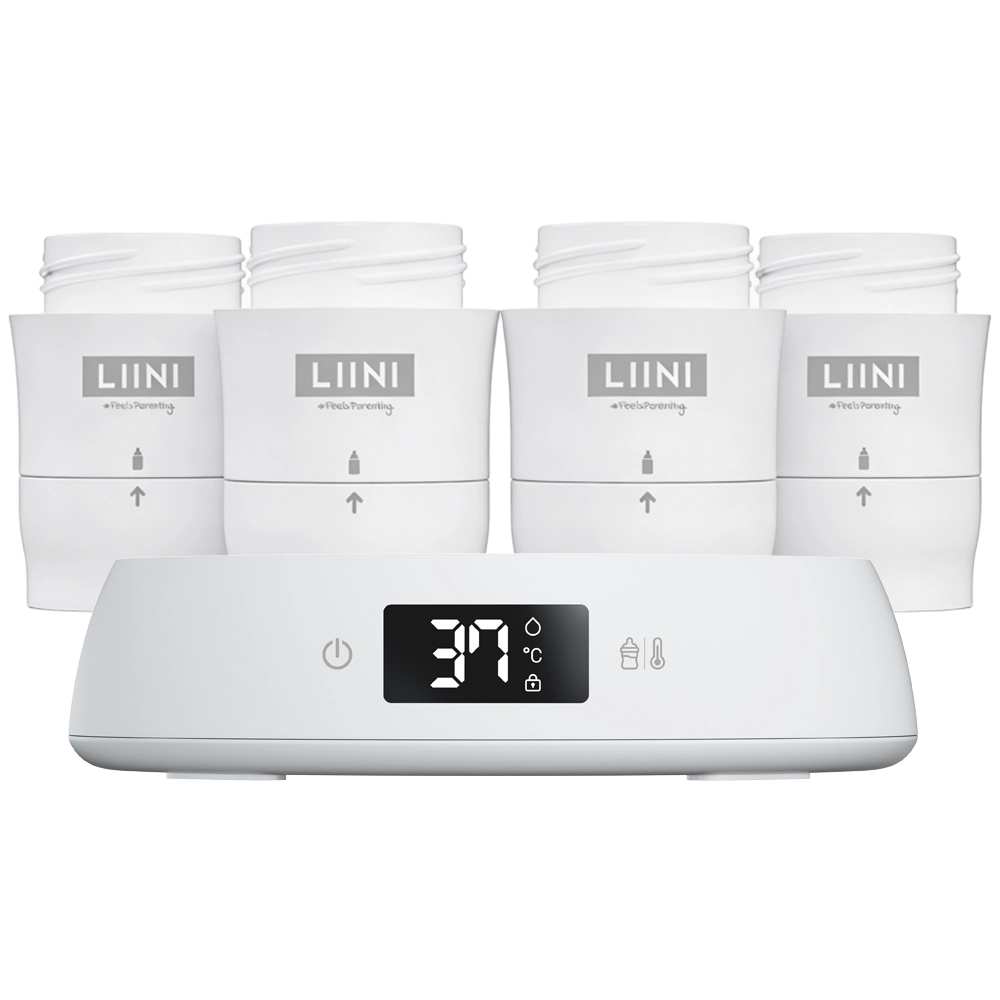 Formula Dispenser Avent
 Baby Bottle Bundle










Glass or Plastic Baby Bottles? Pros and Cons
Glass, PP, PPSU, Tritan, or silicone? A comparison of all materials, what the microplastics study really shows, and how to properly care for bottles and nipples.

Contents
In short
Whether you use a glass or plastic baby bottle: Both materials are suitable for feeding, and according to the British National Health Service (NHS), no one type of bottle has been proven to be better than another. Glass does not release microplastics, hardly absorbs odors, and stays clear for a long time, but it is heavier and can break. Plastic is lightweight and durable. In a laboratory study, polypropylene bottles released many microplastic particles when heated, though there is no evidence that this is harmful to health. Many families use glass at home and plastic on the go and for children who drink on their own.
Glass or plastic baby bottles? This question inevitably comes up when you’re buying your first bottles. Then there are terms like PP, PPSU, Tritan, silicone, and microplastics. Here you’ll find a comparison of all the materials, what the research really says, and how to properly clean bottles and nipples.
Glass Baby Bottles: Pros and Cons
A glass bottle contains no plastic. It therefore doesn’t release any microplastics, not even when filled with hot water. Glass hardly absorbs odors or stains and stays clear for a long time. You can see milk residue and buildup right away.
The downsides: Glass is heavier than plastic, which you’ll notice in your diaper bag. And it can break. That’s why you should check a glass bottle for cracks and chips before each use. Once your child wants to hold the bottle on their own, glass is less practical. Some glass bottles come with a protective silicone sleeve, but even those aren’t completely shatterproof.
Good to Know
Glass does not release microplastics. However, even with glass bottles, the suction cup, screw ring, and lid are usually made of silicone or plastic.
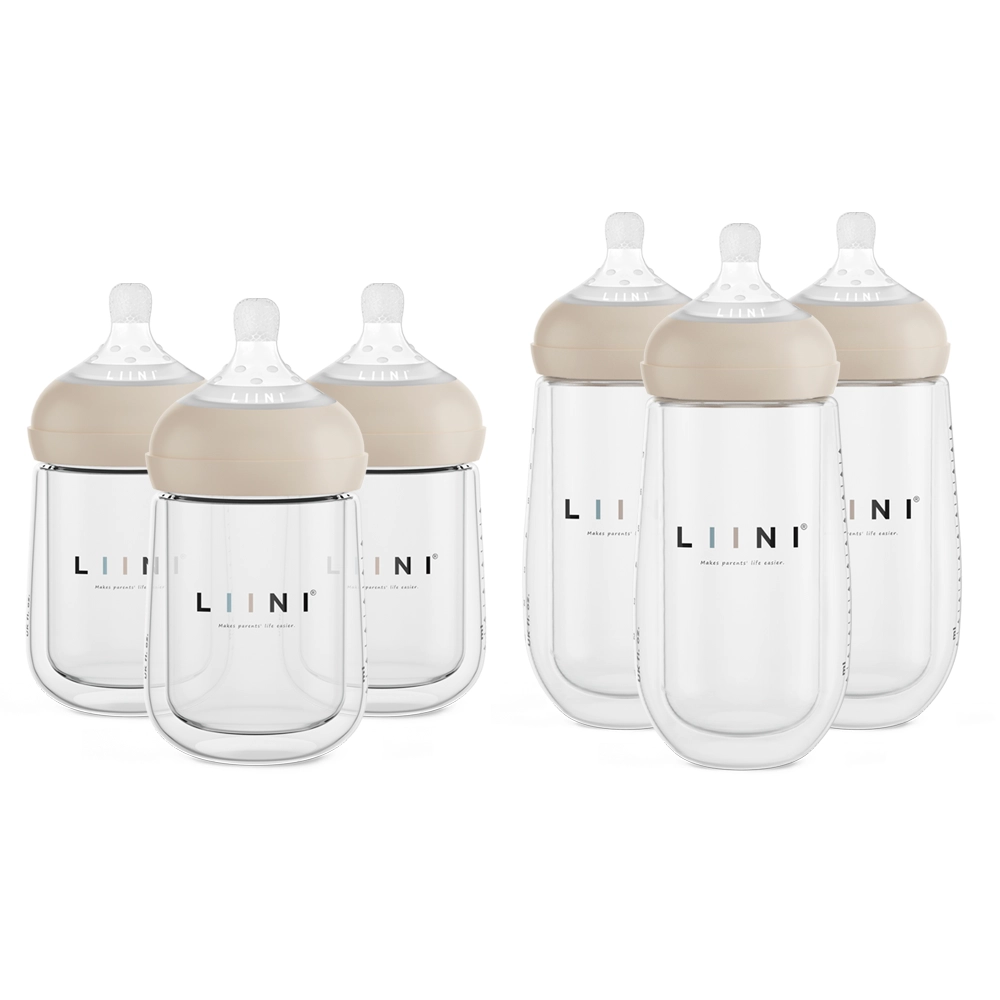
Double-Walled Glass: The LIINI Double-Walled Baby Bottle
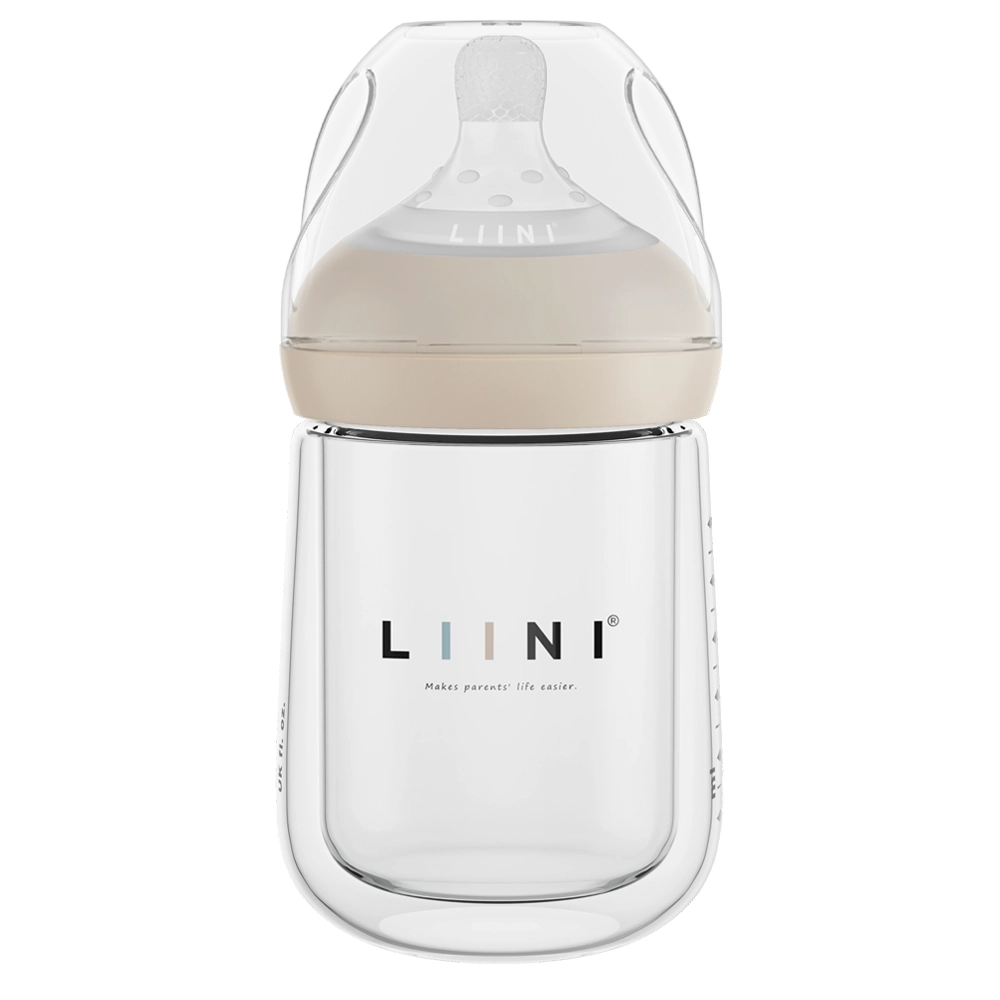
A special type is double-walled glass: the bottle has an inner and an outer glass wall. The LIINI® double-walled baby bottle is made of borosilicate glass and is BPA-free. It is available in 120 ml and 220 ml sizes. According to LIINI, it complies with the European standard EN 14350 for feeding devices for infants and toddlers. It comes with a 0+ nipple and a dust-proof cap made of BPA-free plastic.
Important for everyday use: The double-walled glass bottle is not dishwasher-safe; you must wash it by hand. LIINI advises checking it for cracks before each use and, due to the risk of breakage, does not recommend it for children who drink on their own. It is not compatible with the LIINI night station. You can find all sizes under “Glass Baby Bottles.”
From LIINI


Plastic Bottles: PP, PPSU, and Tritan
Plastic bottles are lightweight and durable. If one falls, it usually survives the fall. That’s why they’re practical once your child can hold the bottle on their own. Over time, they can get scratched, become cloudy, and discolor. You’ll often come across three types of plastic:
- PP (polypropylene): widely used and lightweight. No bisphenol A is used in the manufacture of PP bottles.
- PPSU (polyphenylsulfone): a harder plastic, usually with a light honey-colored hue.
- Tritan: a crystal-clear plastic (copolyester) that resembles glass in appearance.
The manufacturer’s instructions specify how hot a plastic bottle can get and whether it can be placed in the dishwasher or steam sterilizer. Be sure to follow them.
And what about BPA?
Bisphenol A (BPA) used to be found in polycarbonate baby bottles. The EU banned BPA in baby bottles in 2011. Switzerland adopted the ban on polycarbonate baby bottles in 2017. As early as 2014, the Federal Office for Food Safety and Veterinary Affairs (BLV) had tested 37 baby bottles on the Swiss market: not a single one was made of polycarbonate. According to the Federal Office of Public Health (FOPH), baby bottles are therefore no longer a source of BPA.
Silicone bottles: soft and shatterproof
Silicone baby bottles are soft, lightweight, and unbreakable. Some can be squeezed. Silicone is considered odorless and tasteless—you’re probably familiar with this from silicone pacifiers. The 2020 microplastics study examined only polypropylene bottles; it makes no mention of silicone. Care and temperature guidelines should follow the manufacturer’s instructions.
Glass, Plastic, or Silicone: A Comparison
| Criterion | Glass | Plastic (PP, PPSU, Tritan) | Silicone |
|---|---|---|---|
| Weight | Heavier | light | light |
| Breakage | can break | usually survives drops | does not break |
| Heat | Follow the instructions | PP releases more microplastics when exposed to heat | Follow the instructions |
| Cleaning | Smooth; deposits are clearly visible | may get scratched and become cloudy | Soft; follow instructions |
| Odor | barely absorbs odors | May absorb odors and become discolored | is considered odorless |
| Microplastics | The bottle does not release any microplastics | Detected in PP in the lab | Not part of the study |
| Suitable for | at home | on the go, for independent drinkers | on the go, for independent drinkers |
Microplastic-Free Baby Bottles: What the Study Shows
In 2020, researchers at Trinity College Dublin published a study in the journal *Nature Food* examining how much microplastic polypropylene baby bottles release during preparation. In the lab, the amount reached up to 16 million particles per liter. Sterilization and hot water caused the amount to increase significantly.
Here’s how to interpret these findings:
- Laboratory data and estimates: The researchers used a model to estimate how much babies actually ingest. Experts view these figures as guidelines, not precise measurements.
- Health concerns remain unresolved: The researchers themselves explicitly did not want to alarm parents. Based on current knowledge, the German Federal Institute for Risk Assessment (BfR) sees no reliable evidence of health risks from microplastics in food.
- Hygiene remains important: Experts emphasize that the risks of poorly cleaned bottles are well known. So don’t skip cleaning them out of concern for microplastics.
If you want to avoid microplastics as much as possible, glass is the simplest solution. If you use plastic, researchers in Dublin recommend the following steps:
- After boiling, let the bottle cool and rinse it with boiled, cooled water.
- Heat the water in a glass or stainless steel kettle, not in a plastic one.
- Do not reheat prepared milk in the plastic bottle, and do not use a microwave.
- Swirl the bottle gently instead of shaking it vigorously until the powder has completely dissolved.
Nipples: Material and Size
The nipple is the part of the bottle that your baby puts in their mouth. It comes in two materials:
- Silicone: odorless and tasteless, and slightly more durable. According to the Swiss Society for Nutrition (SGE), boiling silicone pacifiers offers no additional benefit.
- Latex (natural rubber): softer, but has a slight odor at first. The surface becomes porous over time. Therefore, you should boil latex pacifiers occasionally and replace them more frequently.
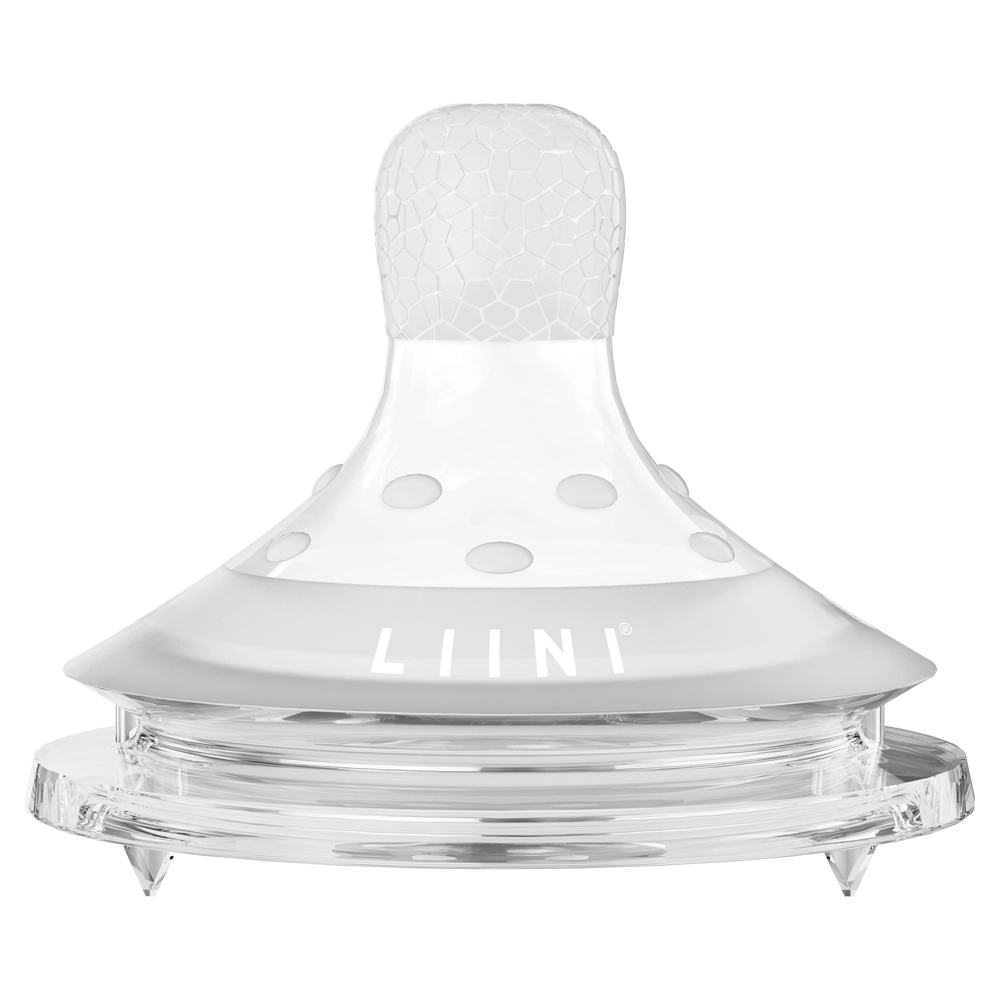
Nipples come in various sizes with different flow rates, usually categorized by age. The categorization varies by brand. LIINI offers the 0+ nipple for use from birth with a gentle flow, followed by the 3+ nipple for use starting at 3 months, and the 6+ nipple for use starting at 6 months. Age is a general guideline. If your baby drinks very quickly or often chokes, the hole might be too large. According to the NHS, drinking too quickly can cause your baby to spit up. If it takes your baby a long time to drink and they become impatient, a higher flow rate might be better. You can find replacements and all sizes under “Teats.”
Tip
Check the pacifiers regularly for cracks, especially when the first teeth start coming in. Replace any damaged pacifier immediately.
Cleaning and Sterilizing Baby Bottles
No matter what material they’re made of: Clean the bottle and nipple immediately after every feeding.
- Rinse immediately: Rinse out any milk residue with hot water before it dries.
- Scrub thoroughly: Clean the bottle, nipple, and ring with dish soap and a bottle brush that you use only for baby bottles.
- Rinse thoroughly: Rinse off any remaining dish soap with clean water.
- Let dry: Let all parts air dry on a clean towel.
- Check: Inspect the glass for cracks and the nipple for damage.
Expert organizations differ on whether you should additionally boil bottles and nipples. The SGE states that boiling or sterilizing bottles and silicone nipples offers no additional benefit if they have been thoroughly cleaned. The Inselspital in Bern, on the other hand, recommends boiling bottles and nipples daily during the first three months of life. According to the Inselspital, a dishwasher set to at least 65 °C can serve as an alternative. According to the NHS, boiling nipples causes them to wear out more quickly. For the LIINI double-walled bottle, LIINI recommends disinfecting the bottle and its parts before each use. If in doubt, ask your parenting support service what’s best for you.
The guide “Preparing Formula: Step by Step” shows you how to properly mix the formula afterward.
Frequently Asked Questions
Is a glass baby bottle better than a plastic one?
Not necessarily. According to the NHS, there’s no evidence that one type of bottle is better than another. Glass has advantages when it comes to microplastics, odor, and durability, while plastic is better in terms of weight and break resistance. Choose based on your daily routine.
Does a glass bottle release microplastics?
The bottle itself doesn’t, since glass doesn’t contain any plastic. However, the nipple, ring, and cap are usually made of silicone or plastic. If you want to avoid microplastics as much as possible, glass is still a good choice.
Is BPA in baby bottles still an issue?
According to the FOPH, not anymore. BPA has been banned in baby bottles in the EU since 2011, and Switzerland adopted the ban on polycarbonate baby bottles in 2017. A BLV investigation found that there were no polycarbonate baby bottles on the Swiss market.
At what age should my child stop using a glass bottle?
There’s no set time. As soon as your child wants to hold the bottle on their own, a shatter-resistant material is more practical. According to LIINI, the LIINI double-walled glass bottle is not intended for children who drink on their own.
Can I warm glass bottles in a bottle warmer?
Yes, many bottle warmers are designed for both glass and plastic bottles. According to LIINI, the warming time for the LIINI 4.0 PRO depends, among other things, on whether the bottle is made of glass or plastic. Check the temperature afterward by placing a few drops on the inside of your wrist. Read more in the guide “How Warm Should Baby Formula Be?”.
Which baby bottle is better for on the go?
Plastic and silicone are lighter and more shatter-resistant. Glass is also fine if you pack the bottle securely. For instructions on how to warm milk on the go, see the guide “Warming Milk on the Go.”
How often do I need to replace the nipple?
The expert organizations do not specify a set schedule. Replace a nipple as soon as it has cracks or is damaged. Latex nipples become porous and need to be replaced more often than silicone nipples.
Sources
- Bottle-Feeding Advice, NHS
- How to Sterilize Feeding Equipment, NHS Best Start in Life
- Microplastic release from the degradation of polypropylene feeding bottles during infant formula preparation, Nature Food (Li et al., 2020)
- High levels of microplastics released from infant feeding bottles during formula preparation, Trinity College Dublin
- Expert reaction to a study examining microplastics and infant feeding bottles, Science Media Center
- Microplastics from baby bottles, Science Media Center Germany
- Microplastics in the Brain? BfR Evaluates New Study—No Evidence of Health Risks So Far, Federal Institute for Risk Assessment (BfR)
- Bisphenol A in Everyday Products: Answers to Frequently Asked Questions, Federal Institute for Risk Assessment (BfR)
- Fact Sheet on Bisphenol A, Federal Office of Public Health (FOPH)
- Handbook “Eating and Drinking in the First Year of Life,” Swiss Society for Nutrition (SGE)
- Information Sheet on Preparing Infant Formula, Inselspital Bern
- Hygiene During Bottle-Feeding, kindergesundheit-info.de, Federal Institute for Public Health
- Preparing Infant Formula, kindergesundheit-info.de, Federal Institute for Public Health
- Bottles: Materials, Nipples, Accessories, Apotheken Umschau